Delayed opening of registration
Registration will not open on February 1st as previously advertised, due to an issue with payment processing.
As soon as this problem has been resolved the registration link will become available. Please check back soon!
Student applications are open
See Registration for details
Speaker
Gustav Markkula
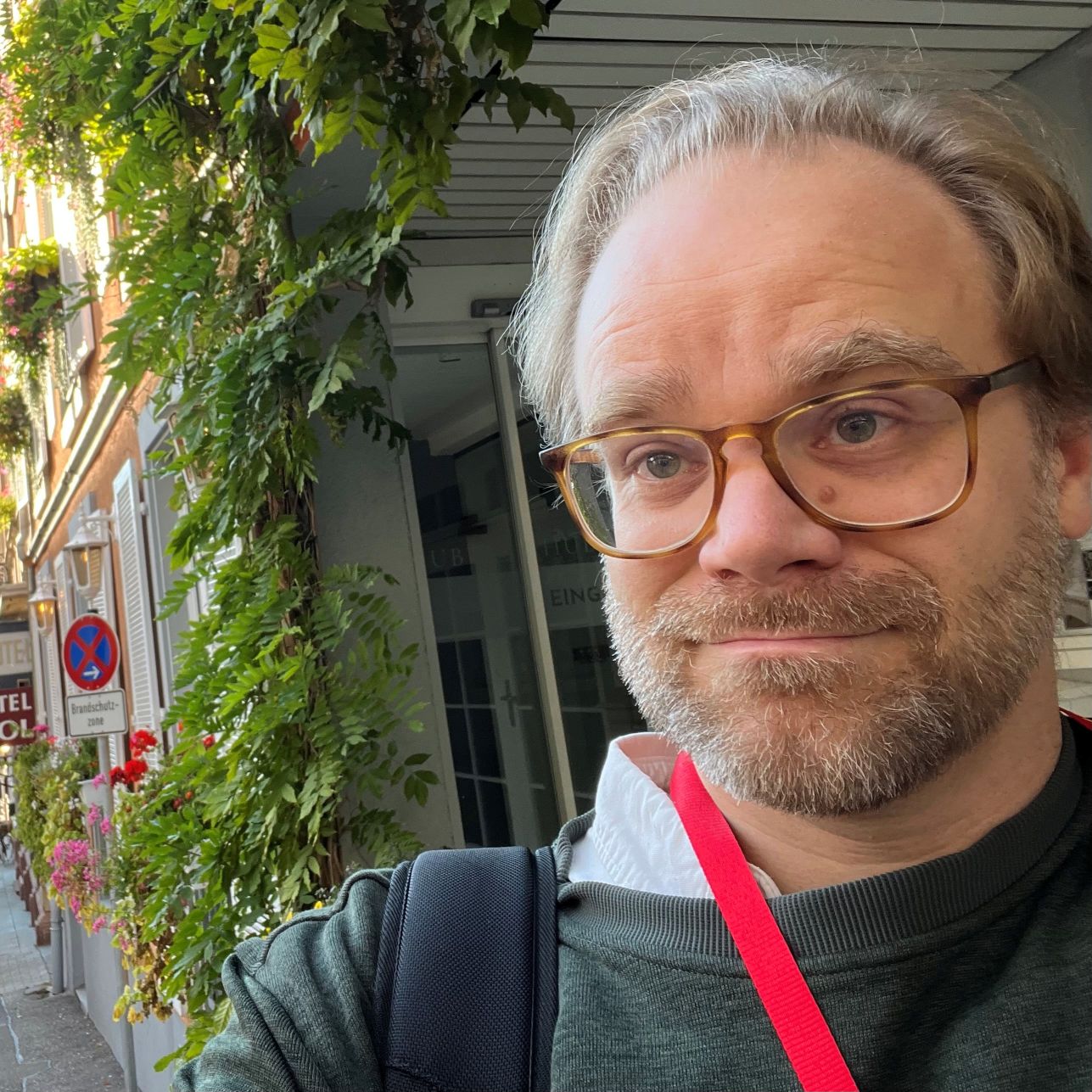
Professor Gustav Markkula is Chair of Applied Behaviour Modelling at the Institute for Transport Studies, University of Leeds, UK. He is an engineering physicist by training, and began his career with a decade of automotive R&D at Volvo. During this time he did his PhD at Chalmers University of Technology, on mathematical modelling of driver behaviour in safety-critical situations. Since joining the University of Leeds in 2015 he has expanded this research to encompass a wider range of road user behaviours, with a particular focus on road user interaction. A recurring element of his modelling work is the adoption of fundamental theories and models developed in psychology or cognitive neuroscience labs, and integrating and adapting these to create models that recreate and explain road user behaviour in real-world traffic. More recently he has also been extending this modelling approach with elements of reinforcement learning. The overarching goal of his research is to promote safer, more human-centric traffic, by optimising how human road users interact with each other, with infrastructure, and with vehicle safety and automation technology.
Keynote Title: Interaction in movement: Computational modelling of human road user behaviour
Abstract: When we humans move our bodies from one point to another in the world, most of the time we do so on or close to roads, as pedestrians, bicyclists, drivers, and so on. As road users we exhibit a complex set of behaviours, spanning a relatively comprehensive subset of human behaviour more broadly, encompassing aspects of perception, motor control, decision-making, interpretation of others’ behaviour, as well as different forms of communication and interaction. To make road traffic safer and facilitate deployment of automated vehicles or robots in public spaces, there is a need for computational models of how humans interact with each other, with robotic agents, as well as with the road infrastructure itself. In this talk I will present some of these application areas, the involved human behaviours and cognitive mechanisms, as well as models developed by us and others to support computational approaches to improved road traffic.
More Information:
Talks at this conference:
| Tu, 9:30 | Interaction in movement. Computational modelling of human road user behaviour Live |